

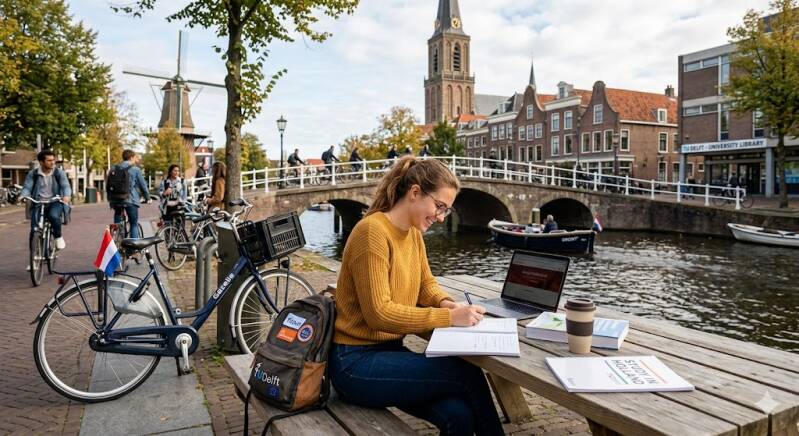
Road Map Netherlands
The Roadmap: How to get settled in 6 steps.
1. Housing, Registration & Phone Number: Finding a studio can be difficult due to high demand, so start early on platforms like Kamernet or Room.nl. After you move, you need to register your address with your local municipality (Gemeente) to receive a BSN (Citizen Service Number).
The next step is to get a Dutch phone number, which is required to get a DigiD (Digital Identity).
DigiD (Digital Identity): This is your most important asset in the Netherlands. It is the digital key you use to log in to government websites, insurance portals, and universities.
- Non-EU Crucial Tip: Your Gemeente appointment requires a valid passport with your MVV/IND provisional visa and your rental contract.
- Connectivity Solution: Avoid local, in-person, only SIM card issues by activating an eSIM before departure.
Get your Airalo Netherlands eSIM here
2. Banking: You will need a Dutch bank account (IBAN) to pay rent, receive a salary, or set up automated payments for your utilities. Banks like ING or Bunq are popular choices for international students due to their English-friendly mobile apps.
- Non-EU Crucial Tip: Traditional banks require a BSN to open an account. To pay rent immediately, use a digital bank like Bunq that accepts a non-EU passport before a BSN is issued.
3. Dutch Government Benefits for Students: If you are a student in the Netherlands, you may be eligible for financial support to help cover your living expenses.
- Non-EU Crucial Tip: Non-EU students can apply for Zorgtoeslag (Healthcare) and Huurtoeslag (Housing). Note: Zorgtoeslag requires a Dutch public basic health insurance policy, which is only obtainable if you are employed.
4. Health Insurance: In the Netherlands, basic health insurance is mandatory for everyone living and working there. Make sure to compare providers as soon as you arrive.
- THE NON-EU HEALTH INSURANCE LAW: If you are a Non-EU student not working, you are forbidden from having Dutch public health insurance and must use a private international policy.
- The Workplace Exception: Once you start a part-time job or paid internship, you must immediately switch to a Dutch public basic health insurance plan. Compare Private & Visa-Compliant Student Plans via HelloSafe
5. Transportation (The Bicycle Culture): A bicycle is not just for recreation in the Netherlands; it is your primary mode of daily transport. Visit a local shop or look for second-hand deals to get your own bike immediately.
6. Social Integration: Join student associations or sports clubs at your university to connect with both local and international students. Building a social circle early on will make your transition much smoother.
- Non-EU Crucial Tip (Working Rights): You are limited to 16 hours/week during the semester, and your employer must obtain a TWV work permit for you.
- Daily Life & Essentials: Moving to a new country comes with a host of practical needs for everyday life. From essential pharmaceuticals and personal care items to seasonal clothes and university outfits, you can get everything quickly and online, with delivery directly to your new address.