

Public Transport, Outdoor Culture, Daily Life, Employment Regulations & Student Labor Rights
Route 1: Students from the EU / EEA / Switzerland
Shared Track: Standardized Transit Mapping & Student Subsidies
Configuring the Regional Transit Networks:
- The Urban Apps: Public transportation in Norway is entirely digitized and operates strictly via smartphone ticketing systems. You must download the specific app assigned to your student hub prior to cross-border transit:
- Oslo & Akershus: Managed by Ruter (via the Ruter App), controlling all city buses, trams, metros (T-bane), and regional ferries.
- Bergen & Vestland: Managed by Skyss (Skyss Billett App), regulating the Bybanen light rail network and regional bus grids.
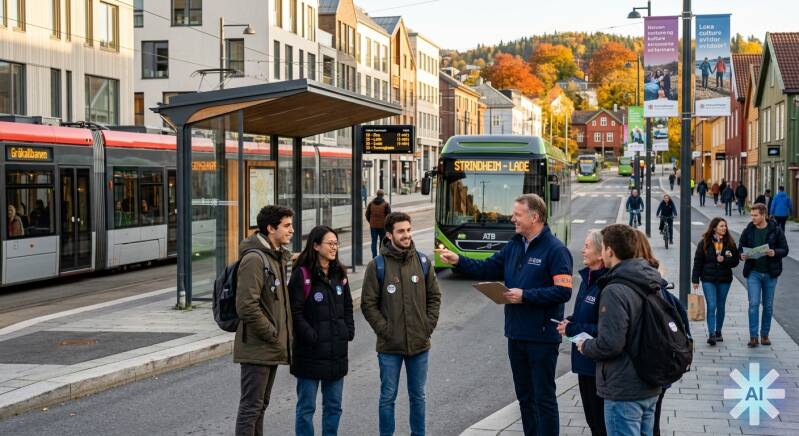
- Trondheim & Trøndelag: Managed by AtB (AtB App), controlling local city bus and tram systems.
- The Arctic & Northern Regions: Managed by Reis (for Nordland) and Snelandia (for Finnmark), regulating remote bus and express boat lines.
- The Massive Student Discount Gateway: All regional networks offer a heavily subsidized 30-day student transit pass. To activate this discount inside the app, the system checks your validation layer. You must input your verified local student ID profile or your scanned university portal log-in showing active semester card registration (Semesterkvittering).
- HubStudentsEurope Regulatory Warning: Do not attempt to travel with a student ticket without carrying your physical university Semester Card (or mobile Studentbevis app) and a valid ID. Random ticket inspections (Kontroll) are frequent, and failure to present real-time proof of active enrollment triggers high automated fines on the spot.
Long-Distance Rail Travel via VY:
- For transnational or cross-regional travel (such as the famous Bergensbanen route linking Oslo and Bergen), national train networks are operated primarily by Vy.
- By selecting the student tier on the Vy.no portal, you unlock standardized state-subsidized cuts on long-distance tickets. Your digital or physical ISIC card or native university registration token serves as your legal validation credential during onboard conductor tracking.
Adapting to Outdoor Culture (Friluftsliv) & Free Equipment Routing:
- The Cultural Reset: In Norway, outdoor life (Friluftsliv) is a core pillar of social integration. To join student excursions, skiing trips, or mountain hikes without spending a fortune on high-end specialized equipment, bypass retail outdoor stores.
- The BUA Subsidized Network: Utilize BUA, a nationwide public equipment lending network supported by local municipalities. By creating a user profile using your local address proof, you can borrow top-tier winter skis, snowboards, mountain tents, sleeping bags, and hiking gear completely free of charge for short-term trips.
Economic Strategy for Daily Life & Supermarket Tiers:
- The Grocery Traps: Norway’s grocery sector is highly consolidated and expensive. To maintain a sustainable student budget, you must strictly route your shopping layouts to the lowest-tier discount supermarkets: Rema 1000 and Kiwi (identifiable by their green branding). Avoid premium networks like Meny or Joker, which carry massive corporate surcharges on identical inventory items.
- The Sustainable First-Aid App: To further optimize your food expenditure, download the international app Too Good To Go. Local bakers, campus welfare cafeterias (Samskipnad dining halls), and grocery stores package leftover high-quality inventory into "Surprise Bags" sold at a massive percentage discount at the end of business hours.
Route 2: Non-EU Students (Specialized Cross-Border Transit Validation)
The Non-EU Passport Rail Exception:
- While EU students can seamlessly cross Nordic land borders using basic ID, third-country nationals traveling long-distance via Vy trains near borders (e.g., entering Sweden or traveling towards the northern boundary lines) must always physically carry their biometric Passport and active Residence Card (Oppholdskort). Standard train conductors or random border checks will completely reject basic university student cards as legal immigration verification papers.


Employment Regulations & Student Labor Rights
To support your daily expenditures and manage the local cost of living legally, you must understand your explicit employment rights and limitations under the Norwegian Directorate of Immigration (UDI) and the Norwegian Tax Administration (Skatteetaten). The frameworks are strictly segregated by your state citizenship:
Route 1: Students from the EU / EEA / Switzerland
As a European citizen holding the right to free movement, your entry into the Norwegian labor market features total legislative flexibility.
- Working Hours Allowance: You have the legal right to work unlimited hours (full-time or part-time) alongside your studies or technical VET training. There is no regulatory cap enforced on your weekly workload.
- The Tax Compliance Loophole (Skattekort): The exact week you secure an official job offer, you must digitally apply for a Tax Deduction Card (Skattekort) through the Skatteetaten portal using your BankID. The tax administration will issue an electronic card directly to your employer stating your percentage-based tax withholding line.
- The Frikort Threshold: If your estimated total earnings during the calendar year remain beneath the national low-income threshold, you can apply for a tax-free card (Frikort), allowing you to receive your salary with zero automated tax deductions up to that statutory limit.
Route 2: Non-EU Students (International Route)
For international third-country nationals, your student visa (Study Permit) carries strict, non-negotiable legal restrictions supervised heavily by UDI.
- The Strict Part-Time Cap: Your study permit grants you an automatic right to work part-time, but you are subject to a strict legal cap of maximum 20 hours per week during the official semester periods.
- Full-Time Holiday Allowance: You are legally authorized to work full-time (up to 40 hours per week) only during official university holidays (summer, winter, and spring breaks), as specified by the academic calendar.
- The Deportation Trapdoor: Exceeding the 20-hour weekly ceiling during regular semester periods constitutes a direct violation of your visa parameters. The Norwegian police (Politiet) and UDI run automated cross-checks between employer salary logs (A-melding) and immigration files. Any variance tracking will trigger immediate visa revocation, cancellation of your residence card (Oppholdskort), and formal deportation.
- The Skattekort Mandate: Just like EU students, you must physically or digitally secure your Skattekort from Skatteetaten before your first payday to prevent an automatic emergency flat-rate withholding tax penalty.

