

Public Transport & Deily Life
To provide a complete guide for all types of international students (both short-term ones like Erasmus and those doing full-time long-term studies), here is the perfect package of transport alternatives. This guide is structured according to your specific needs, budget and lifestyle in Germany.
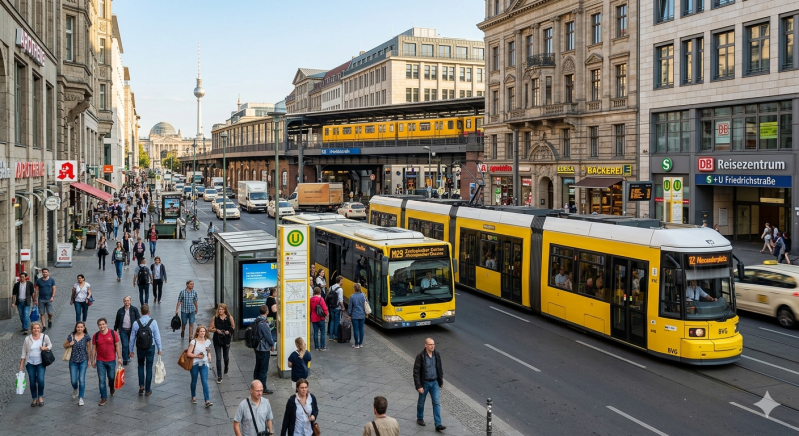
1. Local and Regional Public Transport: The Basic PillarThis is the most widely used mode of transport. However, the approach differs depending on the type of student:For full-time students (long-term or Erasmus): They automatically receive a Semesterticket (Semester Ticket). This is integrated into their semester fee (Semesterbeitrag). In most states, this ticket has been transformed into the student Deutschlandticket, which costs EUR 29.40/month. It gives them unlimited access to all buses, trams, underground trains (U-Bahn), suburban trains (S-Bahn) and regional trains (RE/RB) throughout Germany.
For students at foreign language schools or non-registered PhD students: They are not entitled to the student discount. Their alternative is the standard Deutschlandticket, which costs EUR 58/month (updated price) and works as a digital monthly subscription, cancelable every month.
2. For Micromobility (Short distances, under 3 km)Although the bicycle culture is not at the level of the Netherlands, students use it massively to save time between their dormitory and the university.
Bike-Sharing subscriptions (Nextbike / Call a Bike): German universities have partnerships with these networks. International students only need to register their account with the faculty email address (e.g. .uni-koeln.de) to receive the first 30 minutes free of charge for each ride.
Second-hand bikes (For long-term students): The best platforms to buy a cheap bike (50-80 EUR) are Kleinanzeigen (formerly eBay Kleinanzeigen) or local bike fairs on campus (Fahrradflohmarkt).
Swapfiets (For Erasmus students / short-term): A monthly subscription-based rental service (around 20 EUR/month for students). They get a quality bike, and if something breaks on it, the company repairs or replaces it free of charge within 24 hours. When they leave, they return the bike and cancel the subscription.
3. Long-Distance Travel (Weekend or holiday visits) Deutsche Bahn's high-speed trains (ICE/IC) are extremely expensive if the ticket is bought at the last minute.
Students have three excellent alternatives:
FlixBus and FlixTrain: The number one low-cost alternative. Through the ISIC (International Student Identity Card) or Erasmus Life Network apps, students have permanent access to 10-15% discount coupons.
BlaBlaCar: Very popular in Germany for intercity travel. Students share the cost of fuel with drivers going in the same direction. It is also a great way to practice your German or English with locals.
DB discount cards (BahnCard 25 / BahnCard 50): If a long-term student prefers the comfort of fast trains, they can buy a My BahnCard (discounted version for young people under 27). The BahnCard 25 gives them a 25% discount on any ticket, including those already discounted (Sparpreis).
4. For Exceptional Situations (Large Purchases or Emergencies) Car-Sharing : International students who hold a driving license recognized in the EU (or international license) can use car-sharing apps. Miles is preferred by students because it charges by the kilometer, not by the minute, eliminating the stress of traffic or stoplights.
Local and Regional Public Transport: The Basic PillarThis is the most widely used mode of transport. However, the approach differs depending on the type of student:For full-time students (long-term or Erasmus): They automatically receive a Semesterticket (Semester Ticket). This is integrated into their semester fee (Semesterbeitrag).

For Micromobility (Short distances, under 3 km)Although the bicycle culture is not at the level of the Netherlands, students use it massively to save time between their dormitory and the university.

Long-Distance Travel (Weekend or holiday visits)
FlixTrain
FlixBus
BlaBlaCar


For Exceptional Situations (Large Purchases or Emergencies) Car-Sharing
Miles

Health & Personal Care in Europe
Setting up your new student life in a new country? PromoFarma is your go-to online marketplace for healthcare, skincare, and daily essentials. Instead of wandering through local pharmacies trying to translate labels, you can order certified wellness and personal care products online from trusted European pharmacies.
Why it is perfect for international students?
- One-Stop Shop: Access more than 150,000 personal care products, vitamins, sports nutrition, and cosmetics in one single click.
- Smart Savings: The platform automatically compares prices across hundreds of partner pharmacies to guarantee you get the best deal available.
- Effortless Delivery: No need to search the city; get your parcel delivered straight to your student apartment anywhere you are.
