


Welcome students to Poland.
Moving to Poland for studies comes with a lot of administrative and bureaucratic challenges, but the good news is that you don’t have to go through it all alone. We’ve summarized all the essential steps for you — from finding a dormitory or private apartment, to opening a local bank account and integrating into the community — so you can focus on what really matters: **your studies and student experience.**
Poland is one of the most dynamic and welcoming university destinations in Europe, offering an excellent balance between the quality of education and the cost of living. Whether you come from a European Union member state or from outside the EU (Non-EU), this digital guide has been specially created to turn your relocation process from a bureaucratic stress into a simple and clear transition.
Road Map
STEP 1
Find your accommodation (Housing)
- EU & Non-EU students: The rental market in Poland relies heavily on verified international networks and dedicated student housing platforms. To guarantee 100% safety and avoid scams, we recommend using exclusively verified providers.
- Recommended platforms: Pepe Housing (verified platform for international students with secure deposit holding) or Student Depot / BaseCamp (premium private dormitories managed by official corporate operators).
- Non-EU differentiation: Verified providers and dormitories will require a copy of your passport, valid student visa/residence permit, and official proof of enrollment from your university to finalize your booking.
- The Contract is Key: Always secure your official booking confirmation and signed lease agreement (Umowa najmu). You will absolutely need this original document to complete the mandatory legal registration steps in Poland.
STEP 2
Deposit, Guarantee (Kaucja) & The "Najem Okazjonalny" Contract
- EU students: The standard is to pay a security deposit (kaucja) equivalent to 1 or 2 months' rent. The money is returned upon departure.
- Non-EU Students: Many Polish landlords require a special contract called Najem Okazjonalny (Occasional Rental). This contract requires a notarized declaration stating an alternative address (usually in Poland or the EU) where you can be legally evicted in case of non-payment. For non-EU students without relatives or property in the EU, there are private online services that provide such a legal address for a small fee.
STEP 3
Local Address Registration (Meldunek) & Getting your PESEL Number
This is your very first official appointment in Poland, done at the local District/Municipal Office (Urząd Miasta / Gminy).
- EU Students: By law, you are required to register your living address within 30 days of moving in if your stay exceeds 3 months.
- Non-EU Students: You must complete this address registration within 4 days of arriving at your accommodation.
- The PESEL Number: Upon completing your Meldunek, the clerk will instantly issue your PESEL number (your official Polish national identification and tax number). You will need this number for opening a bank account, medical visits, and taxes.
- Required documents: Passport/ID, your original lease agreement (Umowa najmu), and the completed Zameldowanie form.
STEP 4
Immigration Office: Official Residence Registration (Urząd Wojewódzki)
Once your address is sorted, you must legalize your physical presence in Poland at the regional Immigration Office (Urząd Wojewódzki).
- EU Students (Rejestracja pobytu obywatela UE): Mandatory if your studies last longer than 3 months. You must apply in person within your first 3 months to receive an official Certificate of Registration of Residence. Failing to do so can lead to administrative fines.
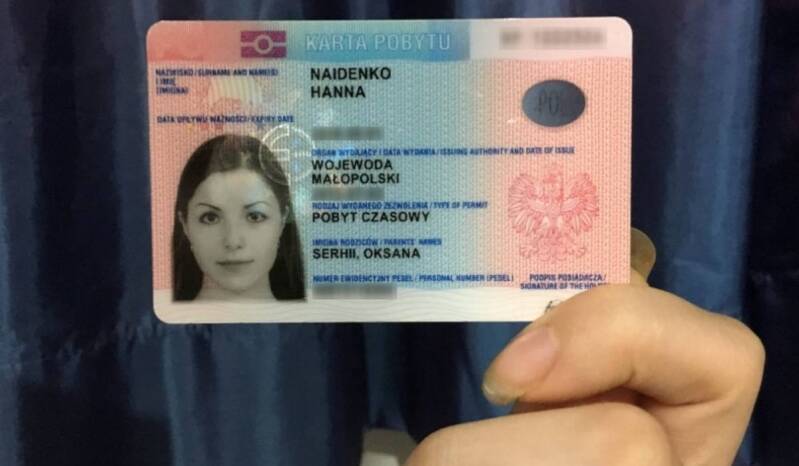
- Non-EU Students (Karta Pobytu): If you entered the country on a national student Visa (Type D), you must apply for a Temporary Residence Permit (Karta Pobytu) before your visa expires. This plastic card serves as your official ID, allows you to stay legally, and lets you travel freely across the Schengen area.
STEP 5
Health and Travel Insurance
- EU Students: You can use your European Health Insurance Card (EHIC) issued in your home country for emergency state medical services.
- Non-EU Students: Comprehensive private health insurance is strictly mandatory for your visa, your Karta Pobytu application, and your university enrollment. The policy must explicitly cover hospitalization and repatriation with a minimum coverage of €30,000.
- HubStudentsEurope Recommendation: To instantly compare the best international health insurance plans that meet your visa requirements, use HelloSafe. It is a free global digital comparator that provides you with an instant digital certificate, completely eliminating local bureaucracy.
STEP 6
Polish Phone Number (+48) & Bank Account (PLN / BLIK)
- Phone SIM Registration: Buy a SIM from operators like Orange, Play, Plus, or T-Mobile. Critical note: By Polish law, all SIM cards must be officially registered with an ID (EU ID or Passport) at any phone shop or convenience store (like Żabka) before they work. You need this local number for delivery apps and your bank.
- Bank Account: Poland does not use the Euro, but the Polish Zloty (PLN). Open an account at student-friendly banks like mBank, Santander Bank Polska, or PKO BP using your new PESEL number.
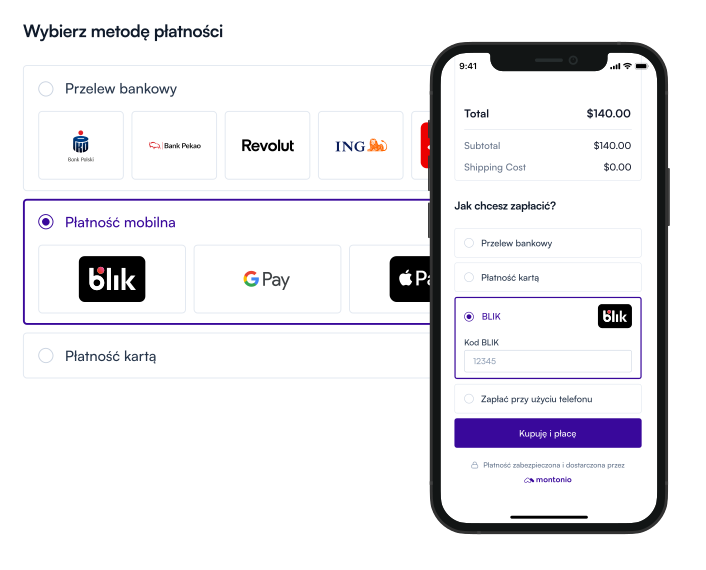
- The BLIK System: All Polish banking apps feature BLIK – an incredibly popular local system that allows you to pay online, use store terminals, or withdraw cash from ATMs using a simple 6-digit code generated instantly on your phone.
STEP 7
State Dormitories (Akademiki) & Student Discounts
- No Rent Subsidies: Poland does NOT have a cash subsidy system for private rent.
- The Cheap Alternative (Akademiki): State universities offer heavily subsidized places in their own dormitories (Domy Studenckie) for around €100–€200/month. However, spaces are highly limited and allocated by the university based on distance or social criteria.
- Legitymacja Studencka: Once enrolled, you will get your official student ID card (physical, or digital in the mObywatel app for EU students). This card legally unlocks a massive 51% discount on all domestic trains in Poland and roughly 50% off urban public transport (buses, trams, metro).
- Apps to use: Download Jakdojade to plan your transit routes and buy urban tickets instantly. For train travel, book via PKP Intercity or Koleo to apply your 51% student discount.
STEP 8
Social Integration, ESN Poland & Work Rights
- The Role of ESN Poland: The Erasmus Student Network (ESN) Poland is one of the largest and strongest in Europe. They are your first real point of contact with the country.
- Buddy System: Through the official platform managed by ESN Poland, you can apply before arriving to receive a “Buddy” (a local Polish student). They will physically help you upon arrival: pick you up from the station, help you settle into your housing, and even accompany you to the municipal offices for your Meldunek or PESEL to bypass the language barrier.
- Events: Local ESN sections organize Orientation Weeks, subsidized trips around Poland, cultural evenings, and parties.
- Work Rights (Non-EU Differentiation): International full-time students (both EU and non-EU) have the legal right to work full-time (40 hours/week) without needing an extra work permit. Note: Make sure your university is officially listed and approved by the Polish Ministry of Interior (MSWiA) to maintain this automatic right to work without bureaucracy.
STEP 1
Find your accommodation (Housing)
- EU & Non-EU students: The rental market in Poland relies heavily on verified international networks and dedicated student housing platforms. To guarantee 100% safety and avoid scams, we recommend using exclusively verified providers.
- Recommended platforms: Pepe Housing (verified platform for international students with secure deposit holding) or Student Depot / BaseCamp (premium private dormitories managed by official corporate operators).
- Non-EU differentiation: Verified providers and dormitories will require a copy of your passport, valid student visa/residence permit, and official proof of enrollment from your university to finalize your booking.
- The Contract is Key: Always secure your official booking confirmation and signed lease agreement (Umowa najmu). You will absolutely need this original document to complete the mandatory legal registration steps in Poland.
Pepe Housing
Is an excellent ally for international students and the official partner of the ESN Poland student networks.
The platform completely eliminates the risk of "advance payment scams" through a protected payment mechanism:
- Initial booking: The student chooses a room/apartment on Pepe Housing and sends a free request (Free Pre-Book). The owner has 24 hours to accept or reject it.
- Security payment: If the request is accepted, the student has 12 hours to pay the first month of rent + the platform's commission directly on the site.
- Money blocked in escrow: Pepe Housing does not send the money directly to the owner. They hold the amount and release it to the owner only 48 hours after the student has actually moved in. If upon arrival the apartment does not exist or does not match the photos, the payment is protected.
- Verified landlords: All listings go through a legal filter, and those with the "Trusted Landlord" label belong to professional property managers or trusted landlords.
- No language barriers: All landlords on the platform speak English, and Pepe Housing customer support guides the student step by step.
- Standardized contracts: You receive a clear rental contract (Umowa najmu), also written in English, perfectly valid for subsequent legal registration in Poland (Zameldowanie).
Although the risk of classic scams is zero, reviews from foreign student communities (on platforms such as Trustpilot reveal a few critical points:
- Prices higher than the market average: Rooms and apartments listed here are often significantly more expensive than those found by locals on general Polish platforms (such as Otodom). This is the cost of the "security fee" and the fact that the owners accept short-term rentals (1-12 months) for Erasmus.
- High administrative fees: The platform charges a fairly high booking fee.
- Deposit disputes: Pepe Housing only protects the first payment and the reservation. After the move, the contractual relationship becomes the direct responsibility of the owner. Some students reported on Trustpilot that certain private owners returned the deposit with difficulty or not at all upon departure, which is why the platform cannot intervene directly after the 48 hours from check-in have expired.
HubStudentsEurope Recommendation
Official promotional codes of ESN Poland (Erasmus Student Network) associations often offer a 10% - 15% discount on the platform's booking fee.

Private Dormitories: Student Depot & BaseCamp (100% Verified)
If you want absolute safety and zero risk of scams, premium private dormitories are the best choice. They operate like long-term student hotels with English-speaking staff and all-inclusive pricing.
Student Depot
- Coverage: The largest network in Poland, with modern buildings in Warsaw, Kraków, Poznań, Łódź, Wrocław, and Gdańsk.
- What you get: Fully furnished single or shared studios with private bathrooms and kitchenettes.
- Perks: All utility bills and high-speed Wi-Fi are included in the fixed monthly price.
Essential Tips for Students:
- Book early: Demand is extremely high. Spaces for the October semester usually sell out by May or June.
- Instant Visa Document: Once you pay your deposit, these operators instantly provide an official booking confirmation. This document is 100% accepted by embassies for visa applications and by local town halls for legal registration (Zameldowanie).

BaseCamp
- Coverage: Premium student housing hubs located in key university cities across Poland (including Warsaw, Łódź, and Wrocław).
- What you get: High-end, beautifully designed private rooms and student studios.
- Perks: Free access to on-site gyms, cinema rooms, massive community kitchens, study/coworking lounges, and 24/7 security.
Essential Tips for Students:
- Book early: Demand is extremely high. Spaces for the October semester usually sell out by May or June.
- Instant Visa Document: Once you pay your deposit, these operators instantly provide an official booking confirmation. This document is 100% accepted by embassies for visa applications and by local town halls for legal registration (Zameldowanie).

STEP 2
Deposit (Kaucja) & The "Najem Okazjonalny" Contract
Before moving in, you must secure your booking financially and understand the specific legal format of Polish rental contracts.
- The Standard: For both EU and Non-EU students, landlords require a security deposit (kaucja).
- The Amount: This usually equals 1 to 2 months of rent.
- Refund Policy: The deposit is fully refundable at the end of your lease, provided the property is returned in the same condition, with no damages beyond normal wear and tear.
In Poland, standard tenant protection laws make evicting non-paying tenants very difficult. To protect themselves, private landlords heavily use a special legal framework called Najem Okazjonalny (Occasional Rental Contract).
- The Requirement: It requires the tenant to sign a notarized declaration (oświadczenie notarialne).
- The Backup Address: In this document, you must provide a certified alternative address (usually within Poland or the EU) where you can be legally evicted if you stop paying rent.
- The Landlord's Consent: The owner of that backup address must also sign a notarized document proving they agree to take you in.
- EU Students: If you have family, relatives, or friends owning property in the EU, you can easily use their address to satisfy the landlord's requirement.
- Non-EU Students: Finding a backup EU address is incredibly difficult if you have no ties to Europe.
The Non-EU Solution: Address-for-Fee Services
If a private landlord insists on Najem Okazjonalny, Non-EU students can legally purchase a notarized backup address through verified online compliance providers (such as NajmCheck) or Renters.pl). For a small one-time fee, these platforms legally act as your guarantor address for the notary.
A massive advantage to the students: Official private dormitories (Student Depo and BaseCamp) DO NOT require a Najem Okazjonalny contract. They use standard corporate lease agreements, completely eliminating this bureaucratic nightmare and notary fees for Non-EU students.


STEP 3
Local Address Registration (Meldunek) & Getting your PESEL Number
This is your very first official appointment in Poland, done in person at the local District or Municipal Office (Urząd Miasta / Urząd Gminy) corresponding to your address.
Legal Deadlines (Strict Law vs. Reality)
- EU Students: By law, you must register your address within 30 days of moving in if your stay exceeds 3 months.
- Non-EU Students: Legally, you are required to register within 4 days of arriving at your accommodation if you plan to stay longer than 30 days.
- Reality Check: Do not panic if you miss the 4-day window. Polish municipal offices are fully aware that setting up a lease or getting an appointment takes time. Fines are practically never enforced for students who register slightly later. Just do it as soon as you have your signed contract!
The PESEL Number (Your Polish ID)
You do not need to apply for this separately. Upon completing your Meldunek (address registration), the system will automatically and instantly issue your 11-digit PESEL number free of charge.
- This number is your official Polish national identification.
- You will absolutely need it to open a local bank account, access public medical care (NFZ), buy student transport passes, and file taxes.
Required Documents to Bring:
To ensure your appointment is successful, you must bring the following hard copies:
1. Valid Passport (or National ID Card for EU citizens).
2. Your Student Visa or Residence Permit (for Non-EU students).
3. The Original Lease Agreement (Umowa najmu) or the official printed accommodation certificate from your private dormitory (Student Depot / BaseCamp).
4. The Temporary Residence Form (Zgłoszenie pobytu czasowego), filled out in Polish. You can print this beforehand or pick it up directly at the office.

STEP 4
Immigration Office: Official Residence Registration (Urząd Wojewódzki)
After registering your address, the legalization of your long-term stay in Poland moves to the regional Foreigners Office.
- EU students (Rejestracja pobytu obywatela UE): Mandatory if your studies last more than 3 months. The application is submitted in person within the first 3 months of arrival at the Voivodeship Office (Urząd Wojewódzki) in your city. The procedure is free of charge, and official details of the documents can be found on the Official Website of the Ministry of the Interior (MSWiA).

- Non-EU students (Karta Pobytu): All applications for a temporary residence permit are handled exclusively online. The mandatory secure government system is the MOS Portal - Moduł Obsługi Spraw.

- Zaufany Profile (Trusted Profile): To submit documents to the MOS portal, you will need a state electronic signature. You can generate this profile for free via the Government Portal Zaufany Profile immediately after obtaining your PESEL number (in Step 3).

STEP 5
Health and Travel Insurance
Having valid health insurance is a strict legal requirement for visas, residence permits and university enrollment. To avoid opaque brokers and queues at the counters, we recommend exclusively the following official and direct options:
- HubStudentsEurope Recommendation — HelloSafe: The only global digital comparator we recommend. It is a 100% free and completely anonymous tool — it analyzes your options without asking for your contact details or sending you to unsafe trading markets. It helps you instantly compare international policies compliant with the Schengen area and sends you directly to the target to obtain the digital certificate you need for your file.
- EU students: They can use the European Health Insurance Card (EHIC) issued free of charge in their country of origin, accepted directly in public hospitals in Poland.

- Voluntary State Insurance (NFZ): A direct option for students is to enroll in the Polish public system through the National Health Fund (Narodowy Fundusz Zdrowia). The official procedure and your rights can be followed directly on the National Health Portal Pacjent.gov.pl.

STEP 6
Connectivity & Banking: Phone Number (+48), eSIM & BLIK System
Getting connected to the internet from the first minutes and opening a bank account are essential steps for a quick and stress-free setup in Poland.
Instant Internet Solution
- HubStudentsEurope Recommendation: Airalo
To avoid airport queues and the waiting time for a local SIM to be activated, we recommend setting up a data eSIM before your departure. Through our official partner Airalo, the world’s largest eSIM store, you can download a flexible data package for Poland directly to your phone. The connection is instant, 100% digital and completely secure, ensuring access to maps and transport apps from the first second you land.
- Polish Phone Number (+48) & Mandatory Registration:
If you need a long-term local phone number, please note that national security legislation in Poland prohibits the operation of anonymous SIM cards. No local card will become active without registering your identity data. This procedure is not done on third-party websites, but exclusively physically, presenting your passport or ID card in the official stores of licensed national operators: Orange, Play, Plus or T-Mobile.

Bank Account and National BLIK System
The official currency is the Zloty (PLN). You can open a student account at major Polish banks directly authorized by the Central Bank. All official banking applications in Poland natively include BLIK — a secure national payment infrastructure. This system allows you to pay for purchases or withdraw money from any ATM instantly, using only a unique 6-digit code generated on your phone. Details about its operation and official security can be found on the Official BLIK Page.
STEP 7
Student ID & Official Transit Discounts
All massive discounts for students in Poland are subsidized by the state and can only be accessed through official government tools.
- Legitymacja Studencka: The physical student ID issued exclusively by your Polish university unlocks a 51% discount on domestic trains and approximately 50% on urban transport by law.
- Government Digital Wallet (EU Only): Students from the European Union can store their official ID in electronic format (mLegitymacja) using the official Polish Government app, accessible at mObywatel.gov.pl.

- Train Travel: Train tickets with the 51% state discount already applied are purchased securely directly from the website of the state railway operator PKP Intercity.

STEP 8
ESN Poland & Your Legal Work Rights
- Integration through ESN Poland: The only European-wide student organization recognized by the European Commission and officially integrated into Polish universities is the Erasmus Student Network. To connect with the local community and request a “Buddy” (a local student who will help you on site for free), access the national ESN Poland platform directly.
- Legal work rights: As a full-time student (both EU and Non-EU), you have the legal right to work full-time (40h/week) without needing an additional work permit. The mandatory condition is that your university is officially accredited. You can check if your institution is on the official approved list by accessing the portal of the Ministry of Science and Higher Education in Poland.

- Legal work rights: As a full-time student (both EU and Non-EU), you have the legal right to work full-time (40h/week) without needing an additional work permit. The mandatory condition is that your university is officially accredited. You can check if your institution is on the official approved list by accessing the portal of the Ministry of Science and Higher Education in Poland.
